Liu Haisu
刘海粟
- 分类: 艺术瑰宝
- ID: 1866082894119514113
Home CategoryArtsLiu HaisuPlay3.5 minsLiu Haisu was born in 1896 in Changzhou, Jiangsu province, China. He was a significant Chinese painter and educator, pivotal in modernizing Chinese art by blending traditional techniques with Western influences.ShareCatalogue1. Early Life and Background2. Artistic Career3. Educational Contributions4. Influence and Recognition
Early Life and Background
Liu Haisu was born in 1896 in Changzhou, Jiangsu province, China. He was a prominent Chinese painter and educator who played a critical role in the modernization of Chinese art. From a young age, Liu was interested in painting and pursued his passion by studying under various masters. He eventually established his own painting style, which blended traditional Chinese techniques with Western influences.
Artistic Career
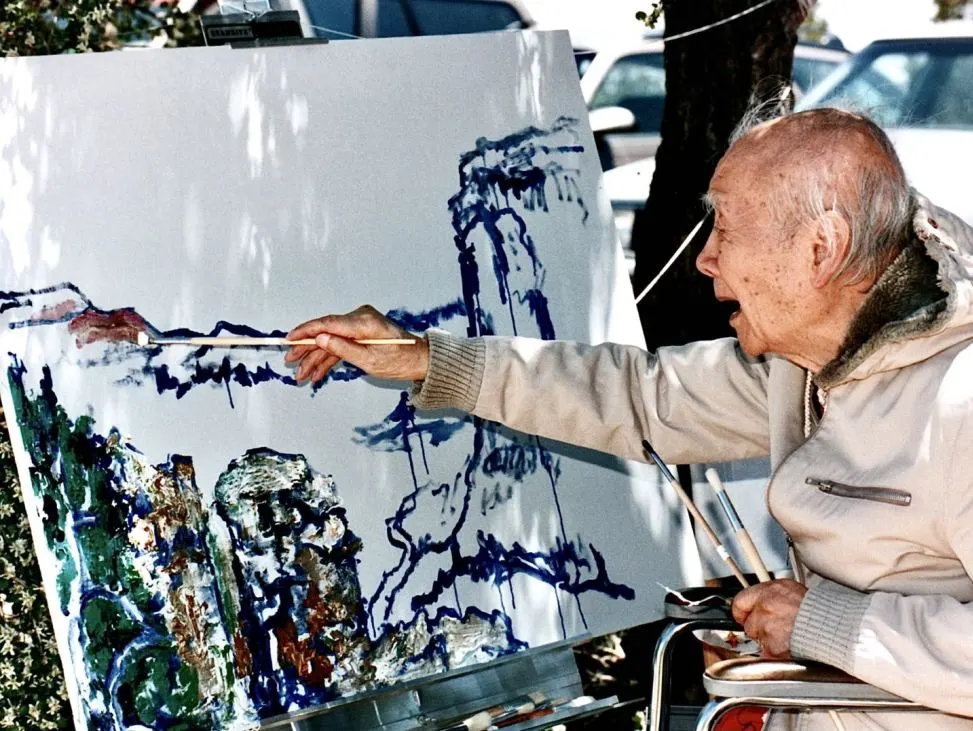
Liu Haisu's artistic journey began with his fascination for the landscapes of Huangshan Mountain. His first encounter with the mountain was in 1918, a trip that profoundly influenced his artistic direction. The breathtaking natural scenery inspired Liu to create modern Chinese art that was innovative and educational.
Throughout his career, Liu made ten visits to Huangshan Mountain, producing numerous paintings in both ink-brush and oil. His works evolved from realistic depictions to more abstract styles, utilizing the pocai technique, where colors are splashed onto paper.
Liu's dedication to art was not limited to creating paintings; he was also a pioneer in art education. In 1912, at just 17 years old, he co-founded the Shanghai Academy of Fine Arts with Wu Shiguang. This institution was pivotal in shaping modern art education in China, emphasizing the need for innovation and creativity.
Educational Contributions
Liu Haisu was a liberal educator who challenged traditional teaching methods. He was instrumental in introducing modern art practices to China, such as the use of nude models in art classes, which sparked controversy at the time. His forward-thinking approach included coeducation, enrolling both male and female students, which was a significant departure from the norm.
Liu's influence extended beyond the Shanghai Academy of Fine Arts. In 1952, the academy relocated to Nanjing and became the Nanjing University of Arts, where Liu continued to serve as principal. He also traveled to Europe, where he was exposed to contemporary art movements, further enriching his teaching and artistic practices.
Influence and Recognition
Liu Haisu's influence on Chinese art and education is undeniable. He mentored many artists who later became influential in their own right. His ability to blend Eastern and Western art forms set a new standard for modern Chinese art, and his educational reforms paved the way for future generations of artists.
In recognition of his contributions, Liu Haisu's works have been exhibited in major museums both in China and abroad. His innovative spirit and dedication to art continue to inspire artists and educators worldwide.
Liu Haisu passed away in 1994, leaving behind a rich legacy of artistic innovation and educational reform. His work remains a testament to the power of art in bridging cultural divides and fostering creativity. Article reference1. Shanghai exhibition marks 'Glorious Pilgrimage'. chinadaily.com.cn. 20212. Natural ability. chinadaily.com.cn. 2017Photo Gallery(16 pictures)CategoriesArtsTagArtistsChinese PaintingRelatedWu ChangshuoCatalogue1. Early Life and Background2. Artistic Career3. Educational Contributions4. Influence and Recognition- - - []








